Redefining Educational Spaces Through the Art of Multi-layer MasterClass Laser Cut Signage
In an era where physical environments are increasingly scrutinized for their ability to inspire and engage, the demand for bespoke, high-quality signage has never been more critical. For educators, workshop leaders, and creative entrepreneurs, the space in which learning occurs is not merely a backdrop; it is an active participant in the educational experience. This shift in perspective has given rise to a surge in interest regarding custom fabrication techniques, specifically the Multi-layer MasterClass Laser Cut approach. This method represents more than just a manufacturing process; it embodies a convergence of digital precision, artistic expression, and tangible durability that resonates deeply with modern aesthetic sensibilities.
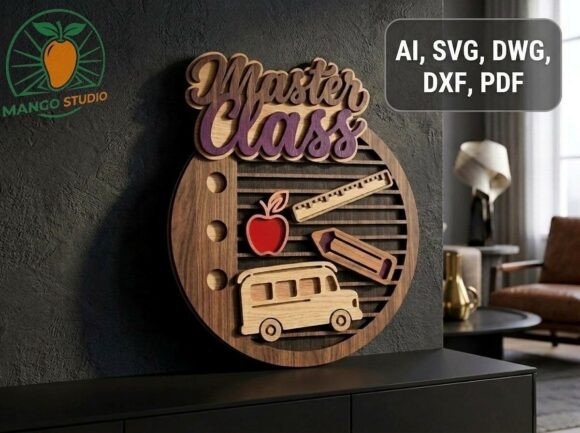
The concept of the Multi-layer MasterClass Laser Cut design centers on creating depth and dimensionality that flat printing simply cannot achieve. By utilizing digital vector files to guide laser cutting machines such as Glowforge, Cricut, or industrial CNC routers, creators can assemble intricate compositions from materials like plywood, MDF, or acrylic. The result is a three-dimensional artifact that commands attention. A prime example of this application is the creation of wall signs featuring classic school iconography—a school bus, an apple, a ruler, and a pencil—arranged upon a stylish notebook-style circular base. These elements, when stacked in layers, transform a simple logo into a textured narrative piece that speaks to the heritage of education while maintaining a contemporary, polished look.
The Intersection of Digital Precision and Tangible Craftsmanship
The growing popularity of layered laser cut designs is not an isolated trend but rather a reflection of broader movements within the maker economy and the professional services sector. As consumers and clients become more discerning, the expectation for generic, mass-produced signage has diminished. Instead, there is a palpable desire for items that convey effort, customization, and quality. The Multi-layer MasterClass Laser Cut technique satisfies this demand by bridging the gap between digital design flexibility and the warmth of physical materials.
Professionals in marketing and branding understand that tactile experiences create stronger memory associations. When a student or a workshop attendee sees a sign where the shadow of a pencil casts a real line onto a wooden background, the brain processes the object differently than it would a printed poster. This psychological impact is why businesses and educational institutions are investing in these designs. They serve as silent ambassadors of quality, suggesting that the instruction provided within the room is equally detailed and thoughtful.
Furthermore, the accessibility of the required technology has democratized this level of production. What was once the domain of large-scale industrial manufacturers is now achievable for freelancers and small business owners. With file formats ranging from AI (Adobe Illustrator) and SVG (Scalable Vector Graphics) to DWG and DXF, the barrier to entry is low. A designer can create a complex, multi-layered composition on a laptop and send it to a local fabrication shop or even produce it in-house using a desktop laser cutter. This workflow efficiency aligns perfectly with the agile needs of modern entrepreneurs who must iterate quickly without sacrificing output quality.
Material Choices and Their Impact on Perception
A crucial aspect of the Multi-layer MasterClass Laser Cut phenomenon is the strategic selection of materials. The recommendation to use plywood, MDF, or acrylic in thicknesses ranging from 3mm to 6mm is not arbitrary; it is a calculated decision based on structural integrity and visual appeal. Plywood offers a natural, organic grain that appeals to eco-conscious institutions and those seeking a rustic or Montessori-inspired aesthetic. The layers of wood create subtle variations in tone, enhancing the 3D effect without the need for paint.
Conversely, acrylic provides a sleek, modern finish that catches light dynamically. When used in a school setting, colored acrylic layers can delineate different sections of a design—for instance, a red apple layer sitting atop a clear or white base—creating a vibrant pop of color that remains durable over time. MDF serves as a versatile middle ground, offering a smooth surface ideal for painting or staining to match specific brand colors. The ability to mix these materials within a single Master Class sign allows for unparalleled customization, ensuring that the final product aligns perfectly with the interior design language of the space it occupies.
Adapting to Changing Workflow Expectations
The relevance of layered laser cutting extends beyond the final product; it also addresses the evolving workflows of creative professionals. In the past, commissioning a custom 3D sign involved lengthy consultations with sign-makers, expensive mold creation, and long lead times. Today, the availability of pre-designed, high-quality digital assets allows for a rapid deployment model. A freelancer can purchase a comprehensive design package containing all necessary vector files, modify the text or scale to fit a specific wall dimension, and have the pieces cut and assembled within days.
This speed-to-market capability is essential in a fast-paced economy where pop-up workshops, temporary training sessions, and rotating classroom themes are common. The flexibility of the Multi-layer MasterClass Laser Cut format means that a single design system can be adapted for various contexts. The same notebook-style base used for a general "Master Class" sign can be repurposed with different icons for specific subjects like "Science Lab," "Art Studio," or "Leadership Workshop." This modularity reduces waste and cost, appealing to budget-conscious administrators and business owners alike.
Moreover, the technical compatibility of these designs ensures longevity. Because the files are provided in universal formats like PDF and DXF, they are future-proofed against software obsolescence. Whether a user prefers Adobe Illustrator for its robust editing tools or a CAD program for precise measurements, the design remains accessible. This interoperability fosters a collaborative environment where designers, fabricators, and end-users can work together seamlessly, regardless of their preferred tech stack.
The Broader Cultural Shift Towards Personalized Learning Environments
Why are people paying attention to this specific style of signage now? The answer lies in a cultural shift towards personalization and the recognition of the "third teacher"—the environment itself. In progressive educational theories, the physical space is considered a teacher alongside the instructor and the curriculum. A sterile, uniform hallway fails to inspire curiosity. However, a corridor lined with rich, textured, multi-layered signs featuring familiar symbols like rulers and school buses creates a welcoming atmosphere that validates the importance of the learning journey.
This trend is mirrored in the corporate training sector. As companies move away from cubicle farms towards open, collaborative hubs, the need for distinct zoning becomes paramount. A "Master Class" area designated by a sophisticated, laser-cut wall sign signals a transition from everyday work to focused development. It creates a psychological boundary that helps participants mentally prepare for deep work. The craftsmanship of the sign reflects the value the organization places on the training being conducted.
Additionally, the rise of the "gift economy" among professionals has fueled interest in these designs. A high-quality, hand-assembled laser cut sign makes for an exceptional gift for retiring teachers, workshop facilitators, or mentors. Unlike a generic plaque, a multi-layered piece demonstrates thoughtfulness and effort. It is an object that carries weight, both literally and metaphorically, serving as a lasting memento of a significant professional milestone.
Practical Applications and Future Outlook
Looking at practical examples, we see schools utilizing these designs to wayfind students through complex campuses. A layered arrow sign pointing to the library, incorporating book and quill motifs, is far more effective than a standard printed directional sticker. Similarly, co-working spaces use them to label meeting rooms, infusing character into otherwise utilitarian spaces. The versatility of the Multi-layer MasterClass Laser Cut approach ensures its continued relevance across diverse sectors.
As technology advances, we can expect even greater integration between digital design and physical fabrication. However, the core principle remains unchanged: the human desire for objects that possess soul and substance. Machine-perfect cuts combined with natural material textures create a unique harmony that resonates with our innate appreciation for craftsmanship. For the modern creator, mastering this medium is not just about learning to operate a laser cutter; it is about understanding how to communicate value through physical form.
In conclusion, the adoption of Multi-layer MasterClass Laser Cut signage represents a strategic investment in brand identity and environmental psychology. It caters to a market that values uniqueness, quality, and meaningful design. Whether utilized for decorating a classroom, marking a corporate training zone, or gifting a beloved educator, these designs offer a powerful way to elevate the perceived value of any educational endeavor. By leveraging the precision of digital tools and the warmth of traditional materials, professionals can create spaces that do not just house learning, but actively celebrate it.
For those ready to implement this strategy, the path is clear. Utilizing compatible files for machines like Glowforge or CNC routers allows for immediate execution. The choice of materials—from sturdy 6mm plywood to sleek acrylic—provides the canvas for innovation. As the boundaries between digital and physical continue to blur, the Multi-layer MasterClass Laser Cut stands as a testament to the enduring power of well-crafted, tangible communication in a digital world.