Elevating Your Visual Storytelling with a Realistic Glass of Bourbon and Ice
There is a specific kind of atmosphere that a well-crafted image can evoke instantly. Think about the clink of ice against crystal, the amber glow of aged spirits catching the light, and the subtle condensation forming on the outside of a tumbler. This isn't just a picture of a drink; it is a visual shorthand for relaxation, sophistication, celebration, or even the quiet end to a long workday. When we talk about using a Realistic Glass with Bourbon and Ice in your projects, we are discussing a powerful asset that bridges the gap between abstract concepts and tangible feelings. Whether you are a marketer launching a new lifestyle brand, a blogger writing about weekend unwind rituals, or a designer creating packaging for a premium product, the right 3D illustration can do the heavy lifting for your narrative.
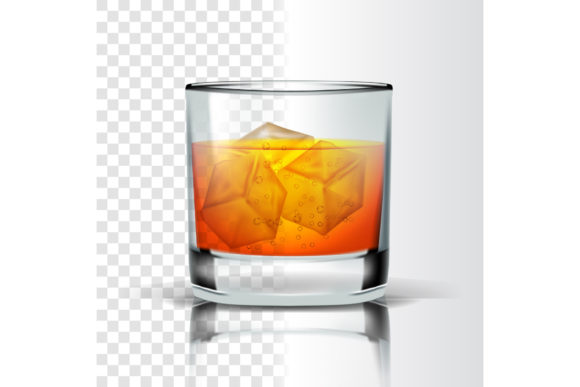
In the digital age, authenticity is currency. Stock photography often feels staged or generic, lacking the specific lighting and texture details that make an image feel "real." This is where high-quality 3D illustrations, available in formats like JPG for web use and EPS for scalable vector editing, become indispensable. A realistic rendering of whisky or bourbon distilled and aging in wooden barrels, poured into a glass with bubbles and ice cubes isolated on a transparency grid, offers unparalleled flexibility. You aren't stuck with a fixed background or awkward lighting; you have a pristine, high-fidelity element that you can integrate seamlessly into any design ecosystem.
Why Specificity Matters in Visual Assets
You might wonder why you shouldn't just grab any photo of a drink from a free stock site. The difference lies in the details that trigger psychological responses in your audience. A generic image might show a brown liquid in a clear cup. A Realistic Glass With Bourbon And Ice Cubes Vector, however, captures the refraction of light through the melting ice, the specific viscosity of the alcohol, and the tiny bubbles that indicate freshness and carbonation or the pour itself. These micro-details signal quality to the viewer subconsciously.
For entrepreneurs and small business owners, this level of detail translates to brand perception. If you are selling a premium consulting service, a coaching program, or a luxury physical product, your visual language must match your price point. Using a low-resolution or obviously fake image can undermine trust before a potential client even reads your copy. Conversely, integrating a photorealistic 3D element suggests that you care about quality and aesthetics, traits that customers want to associate with your business.
Practical Applications Across Industries
The utility of a Realistic Glass with Bourbon and Ice extends far beyond the alcohol industry. While it is obviously perfect for distilleries, bars, and liquor retailers, its application in broader contexts is where its true value shines. Let's look at how different professionals can leverage this asset.
- Digital Marketers and Ad Creators: Imagine running a campaign for a men's grooming line or a high-end watch brand. The lifestyle associated with these products often includes moments of leisure and refinement. Placing a realistic bourbon glass next to your product in a composite image creates an immediate association with maturity and success without needing a thousand words of explanation.
- Content Creators and Bloggers: If you run a lifestyle blog focusing on work-life balance, interior design, or hobbyist guides, this image serves as a perfect header or social media graphic. It visually represents the concept of "unwinding" or "celebrating a milestone." Because the image is isolated on a transparency grid, you can place it over your unique background textures—perhaps a dark wood desk or a cozy leather armchair—to match your specific site aesthetic.
- Packaging Designers: For those working on label designs or box art, having access to an EPS vector file is a game-changer. You can scale the glass of bourbon up or down without losing resolution, adjust the color grading of the liquid to match brand guidelines, or manipulate the lighting effects to ensure consistency across print and digital mediums.
- Educators and Presenters: Even in educational settings, such as hospitality management courses or marketing workshops, realistic visuals help illustrate points about product presentation, the chemistry of distillation, or the psychology of consumer behavior. A clear, bubble-rich illustration of aged spirits can make a slide deck feel professional and engaging rather than dry and text-heavy.
The Technical Advantage of Isolated 3D Illustrations
One of the most frustrating aspects of working with standard photography is the time spent masking out backgrounds. Hair, glass edges, and liquid reflections make clean cutouts difficult and often result in jagged, unnatural borders. A Realistic Glass with Bourbon and Ice created as a 3D illustration and delivered with a transparency grid solves this problem at the source. The isolation is perfect by design.
This technical advantage allows for rapid prototyping. If you are an agency owner pitching a concept to a client, you can drop this asset into five different mockups in minutes to see which direction resonates best. Does it look better against a midnight blue background? Or perhaps a warm, textured paper grain? The flexibility of the JPG format ensures quick loading times for web previews, while the underlying quality remains high enough for close-up inspection. Furthermore, because it is a 3D render, the lighting is consistent and可控 (controllable) in the creation phase, meaning you don't have to worry about conflicting light sources when compositing it into your own scenes.
Choosing the Right Asset for Your Project
Before you download or purchase a Realistic Glass With Bourbon And Ice Cubes Vector, consider the specific context in which it will live. Not all "realistic" images are created equal. Some may lean towards a hyper-stylized, advertising gloss, while others aim for a moody, cinematic darkness. Think about your brand voice. Are you energetic and bright, or subdued and exclusive?
Also, pay attention to the details of the pour. Is the focus on the aging process, represented by the rich amber color and bubbles? Or is it on the refreshment aspect, highlighted by the frosty ice cubes? Understanding these nuances helps you select an image that aligns with your message. For instance, if you are writing about the craftsmanship of whisky distilled and aging in wooden barrels, you want an image where the liquid's color and clarity are the heroes. If you are promoting a summer cocktail event, the interaction between the ice and the glass might be more relevant.
Maximizing ROI Through Versatile Visuals
Investing in high-quality assets pays off through longevity and versatility. A single, excellent 3D illustration of a bourbon glass can be repurposed across dozens of touchpoints. Use it in your email newsletter headers, your Instagram stories, your website's hero section, and even in printed brochures. Because the image is timeless—it doesn't feature trendy clothing or dated technology—it won't need to be replaced next season. This consistency builds brand recognition. Over time, your audience begins to associate that specific visual style of amber liquid and clinking ice with your brand identity.
Moreover, using distinct, high-quality imagery improves engagement metrics. Users are more likely to stop scrolling when they encounter an image that looks tactile and inviting. The brain processes realistic textures faster than abstract graphics, leading to quicker comprehension of your content's theme. In a crowded digital landscape, that split-second advantage is crucial.
Ultimately, whether you are a freelancer looking to upgrade your portfolio, a publisher needing compelling chapter headers, or a hobbyist creating a personalized gift tag, the Realistic Glass with Bourbon and Ice is more than just a picture. It is a tool for communication. It conveys warmth, quality, and experience. By choosing assets that prioritize realism and technical flexibility, you empower yourself to tell better stories, connect more deeply with your audience, and elevate the perceived value of everything you create. The next time you need to illustrate a moment of pause, celebration, or refined taste, remember that the right visual element can turn a good idea into a memorable experience.