Evaluating the Family Monogram Bundle SVG and Split Monogram Designs for Custom Crafting
For crafters and small business owners working with digital cutting machines, selecting the right design files is a critical step in the production process. The Family Monogram Bundle SVG combined with Split Monogram styles represents a specific category of digital assets designed to bridge the gap between aesthetic appeal and technical functionality. Unlike standard single-layer images, these bundles are engineered for versatility across various fabrication methods, including vinyl cutting, laser engraving, and CNC routing. Understanding the distinct characteristics of this bundle, how it compares to other file types, and where its limitations lie is essential for making an informed decision before integrating it into your workflow.
Defining the Product: More Than Just a Graphic
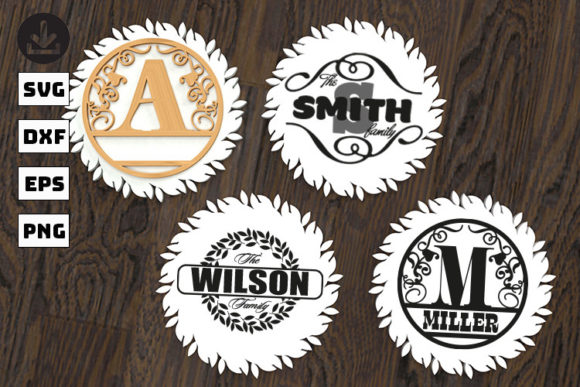
The core value of a Family Monogram Bundle SVG lies in its construction. These are not merely raster images like JPEGs; they are vector-based or layered files created in professional software such as Adobe Illustrator. This origin ensures that the lines are mathematically defined, allowing for infinite scalability without loss of quality. The inclusion of "Split Monogram" designs adds a layer of complexity and utility. A split monogram typically separates the letters or elements of a name, often interlocking them or arranging them in a way that requires precise alignment during the cutting or assembly process.
What makes this specific bundle distinct is its multi-format approach. While many free resources offer only a single file type, a comprehensive bundle usually includes SVG, EPS, DXF, PNG, and PDF formats. This variety is not redundant; each format serves a specific machine or software ecosystem. For instance, SVG is the native language for web-based cutting software like Cricut Design Space and Silhouette Studio (developer edition), while DXF is often preferred by older plotters or specific CAD programs used in industrial settings. The presence of a transparent PNG allows for sublimation or direct printing, expanding the product's utility beyond physical cutting.
Comparative Analysis: Bundles vs. Single Files and Raster Images
When evaluating digital assets, creators often face a choice between purchasing a curated bundle or sourcing individual files. The primary advantage of a Family Monogram Bundle SVG over single purchases is consistency and workflow efficiency. When buying individual designs from various sources, users often encounter inconsistent line weights, varying layer structures, and disparate scaling standards. A unified bundle ensures that all three included designs share the same structural logic, making it easier to batch process orders or create cohesive product lines.
Furthermore, comparing these vector bundles to raster alternatives highlights significant tradeoffs. Raster images (pixels) are resolution-dependent. If a user attempts to enlarge a low-resolution PNG for a large wooden sign, the result will be pixelated and unprofessional. In contrast, the vector files within this bundle (SVG, EPS, DXF) maintain crisp edges regardless of whether the final output is a 2-inch sticker or a 24-inch wall decal. However, raster files do have their place; the included transparent PNG is superior for applications where cutting paths are not required, such as heat transfer printing or digital mockups.
Another comparison point is the "Split" aspect versus traditional solid monograms. Traditional monograms are often welded into a single shape, which is excellent for simple vinyl decals but limits creative assembly. Split monograms allow for multi-material projects. For example, a crafter might cut the outer frame from wood and the inner letters from acrylic, assembling them for a 3D effect. This flexibility is a key differentiator for users looking to create high-value, dimensional products rather than flat stickers.
Technical Compatibility and Machine Requirements
Before committing to a download, it is vital to assess machine compatibility. The Family Monogram Bundle SVG is marketed as perfect for cutting machines, CNC routers, and lasers, but the reality depends on the user's specific setup. Most modern hobbyist machines, such as those from Cricut or Silhouette, handle SVG files natively. However, users must be aware of software behaviors. As noted in the product details, designs intended for Cricut machines may require the use of the "Weld" function before cutting. This step groups the separate elements of the split monogram into a single continuous path, preventing the machine from cutting out tiny, loose pieces that could shift or get lost during the weeding process.
For laser cutter and CNC users, the DXF and EPS files are often more reliable. These formats preserve the geometric data required for toolpath generation. The bundle includes a specific file designated for "3D laser cut," indicating that the designer has accounted for kerf (the width of the material removed by the laser) or layering depth. This is a crucial detail for users working with plywood or metal, where precision fitment is necessary for assembly. If a user attempts to use a standard SVG meant for vinyl on a laser cutter without adjusting for material thickness, the resulting joints may be too loose or too tight.
It is also important to remember that this is a digital item. No physical product will be shipped. The user receives a ZIP file containing the designs on a 30cm x 30cm page layout. Proper extraction of this file is the first technical hurdle. Users on Windows should right-click the folder and select "Extract All," while Mac users can simply double-click the archive. Attempting to open files directly from within the compressed folder can sometimes lead to corruption or software errors, so dragging the files to a new location is a recommended best practice.
Material Versatility and Application Scenarios
The true test of a design bundle is its performance across different materials. The Family Monogram Bundle SVG is touted for its adaptability with wood, metal, paper, cardboard, and plywood. Each material presents unique challenges that the file formats aim to address.
- Vinyl and Paper: For these thin materials, the SVG format excels. The clean vectors ensure that intricate parts of the split monogram do not tear. The "weld" feature mentioned earlier is particularly useful here to create a single-piece decal.
- Wood and Plywood: When cutting wood, the DXF file is often preferable for CNC machines. The split nature of the monogram allows for inlay work, where contrasting wood species are fitted together. Users must ensure their machine can handle the level of detail in the font style chosen within the bundle.
- Metal: Laser cutting metal requires high precision. The vector paths provided in the EPS or DXF files allow the laser to follow exact coordinates. However, metal users must verify that the design's minimum line width exceeds the capabilities of their specific laser wattage to avoid burning through delicate connections.
- Cardboard: Ideal for prototyping or packaging. The PDF format included in the bundle can be useful here for printing templates before committing to a cut.
Decision Factors: When This Bundle Is the Right Choice
Deciding whether to invest in this specific bundle comes down to your project goals and technical comfort level. The Family Monogram Bundle SVG is an ideal choice if you are a small business owner creating personalized home decor, wedding gifts, or custom signage. The inclusion of multiple formats reduces the need to convert files manually, saving time and reducing the risk of errors during conversion. It is also suitable for hobbyists who own multiple types of machines (e.g., both a vinyl cutter and a laser engraver) and want a single asset library that works for both.
However, there are scenarios where this might not be the best fit. If a user exclusively works with raster-based editing software like Photoshop and has no intention of cutting materials, a dedicated high-resolution photo bundle might be more appropriate, although the included PNG covers this base. Additionally, beginners who are unfamiliar with file management (unzipping folders) or machine settings (welding, layering) may find the technical requirements slightly steep. The requirement to manually weld designs in certain software implies that the files are delivered in their raw, editable state rather than pre-processed for every specific machine, which offers flexibility but demands user knowledge.
Limitations and Best Practices
While versatile, these digital designs are not magic solutions. The quality of the final output is heavily dependent on the user's machine calibration and material selection. A common limitation with split monograms is the fragility of thin connecting points. When cutting thick materials like 3mm plywood, very fine details in the font may break off if the material grain is uneven. Users should always perform a test cut on scrap material before proceeding with the final piece.
Furthermore, the "3D laser cut" file included in the bundle suggests a specific assembly method. Users must understand that achieving a 3D look often requires stacking multiple layers of material. This increases material costs and assembly time compared to a single-layer cut. It is a tradeoff between visual impact and production efficiency.
In conclusion, the Family Monogram Bundle SVG with Split Monogram options offers a robust set of tools for the modern maker. Its strength lies in its format diversity and adaptability to various substrates, from delicate paper to sturdy metal. By understanding the technical nuances of file formats, the necessity of software functions like welding, and the specific requirements of different cutting technologies, users can leverage this bundle to create professional-grade custom products. It is a resource best suited for those willing to engage with the technical side of crafting to achieve superior, scalable results.