Crafting Botanical Elegance: A Guide to Free Standing Lace Geranium Earrings
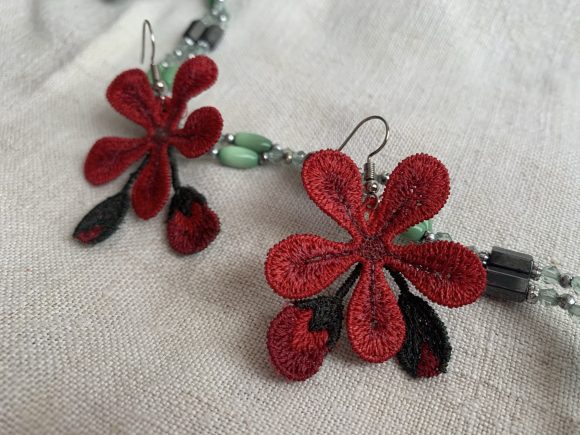
The intersection of traditional textile arts and modern wearable fashion has created a vibrant niche for creators who value both precision and organic beauty. Among the most captivating projects in this realm is the creation of Geranium Earrings using free standing lace (FSL) techniques. This specific application of machine embroidery transforms delicate thread into structural, three-dimensional jewelry that captures the essence of summer flora. The pelargonium geranium, with its distinct five-petal structure, offers an ideal botanical model for this medium. Its symmetry allows for balanced design execution, while its layered appearance provides depth when translated into stitched form.
For hobbyists, professional designers, and small business owners alike, understanding the mechanics of free standing lace is essential. Unlike traditional embroidery, which relies on a fabric backing for stability, FSL constructs the design entirely from thread and stabilizer. The result is a lightweight, airy, and intricate piece that retains its shape without heavy interfacing. When applied to jewelry, such as earrings, this technique offers a unique advantage: the ability to create substantial visual impact with minimal weight, ensuring comfort for the wearer.
The Structural Advantage of the Pelargonium Design
The choice of the pelargonium geranium for this project is not merely aesthetic; it is structural. Pelargonium flowers typically feature five similar petals arranged in a radial pattern. This geometry is particularly forgiving and effective for beginners and experts working with free standing lace. In FSL designs, balance is critical. An asymmetrical or overly complex shape can lead to warping or uneven tension during the stitching process. The five-petal layout distributes tension evenly across the hoop, resulting in a flat, stable final product that requires minimal corrective finishing.
Furthermore, the natural layering of geranium petals lends itself beautifully to a 3D summer earrings project. By stitching multiple layers or utilizing varying thread densities, creators can mimic the subtle shadows and highlights found in living flowers. This depth is difficult to achieve with flat printed materials or simple cut-outs. The texture of the thread itself adds a tactile quality that elevates the piece from a simple accessory to a work of textile art. Whether using matte cotton threads for a rustic look or shiny rayon for a more glamorous finish, the material choice interacts with the light, enhancing the three-dimensional effect.
Technical Requirements and File Compatibility
One of the significant benefits of purchasing or downloading professional machine embroidery designs for Geranium Earrings is the versatility of file formats. Modern embroidery machines operate on various proprietary systems, requiring specific file types to interpret stitch data correctly. A high-quality design package will typically include multiple embroidery file formats, such as PES, DST, EXP, JEF, and XXX. This compatibility ensures that the design can be used in multiple embroidery machines, ranging from home hobbyist models to industrial multi-needle units.
Before beginning the project, it is crucial to verify that your machine supports the specific file format provided. While many modern machines can read a wide array of formats, older models may require conversion software. It is also advisable to review the design preview on your machine’s screen to check for any potential stitch density issues. High-density areas in free standing lace can sometimes cause needle breakage or thread bunching if the tension is not adjusted properly. Testing the design on a scrap piece of water-soluble stabilizer is a best practice that saves time and materials in the long run.
The Workflow: From Hoop to Hook
Creating free standing lace jewelry involves a distinct workflow that differs from standard embroidery. The process begins with the selection of the appropriate stabilizer. For FSL, a heavy-weight water-soluble stabilizer is mandatory. This material provides the temporary foundation needed for the stitches to interlock and form a cohesive structure. Once the stabilizer is hooped tightly, the embroidery process begins. The machine will first stitch a placement line or a tack-down stitch, followed by the intricate satin stitches and fill patterns that make up the geranium petals.
After the embroidery is complete, the removal of the stabilizer is the most critical step. The hooped piece should be carefully removed from the machine. Using sharp scissors, trim away the excess stabilizer around the design, being careful not to cut any of the connecting threads. The piece is then submerged in warm water. As the stabilizer dissolves, the lace structure remains. It is important to handle the wet lace gently, as it is fragile at this stage. Some creators prefer to let the pieces air dry on a flat surface, while others may use a low-heat iron to press them flat once they are completely dry. Pressing helps to set the stitches and remove any wrinkles caused by the drying process.
Assembly and Finishing Techniques
Once the individual floral elements are dry and pressed, the assembly phase begins. The prompt specifies that after embroidery, you will need to stitch or glue all the elements. For Geranium Earrings, this usually involves layering two identical flower pieces back-to-back to hide any raw edges or loose threads on the reverse side. This double-layer approach also adds durability and rigidity to the earring.
There are two primary methods for joining these layers:
- Adhesive Method: Using a clear-drying fabric glue or a specialized jewelry adhesive allows for a clean bond without visible stitching. This method is faster and maintains the pristine look of the lace. However, it requires precision to ensure the glue does not seep out from the edges.
- Stitching Method: Hand-stitching the layers together using a fine needle and matching thread offers a more traditional and secure bond. This technique allows for greater control and can add a decorative element if a contrasting thread is used. It is particularly useful if the design includes small beads or embellishments that need to be secured simultaneously.
Regardless of the joining method, the final step is attaching the hardware. Use earrings hooks that are compatible with the weight and style of the finished piece. Gold-filled, sterling silver, or surgical steel hooks are recommended for their durability and hypoallergenic properties. A small jump ring is typically used to connect the top of the geranium flower to the hook. Ensure that the jump ring is securely closed to prevent the earring from detaching during wear.
Material Considerations for Durability and Aesthetics
The longevity of free standing lace jewelry depends heavily on the materials chosen. Thread selection plays a pivotal role. Polyester threads are highly recommended for FSL projects due to their strength and resistance to moisture and UV light. This makes the Geranium Earrings suitable for summer wear, where exposure to sunlight and humidity is common. Rayon threads, while offering a superior sheen, are more delicate and may degrade faster if exposed to harsh conditions.
Additionally, the choice of adhesive or thread for assembly must consider environmental factors. If the earrings are intended for outdoor events or beachwear, waterproof adhesives and rust-proof metal findings are essential. Creators should also consider the size of the geranium design. While larger flowers make a bold statement, they may be too heavy for comfortable all-day wear. Scaling the design to a moderate size ensures that the earrings remain lightweight and practical.
Commercial and Creative Applications
Beyond personal use, the production of Geranium Earrings presents viable opportunities for small businesses and Etsy sellers. The uniqueness of handcrafted FSL jewelry appeals to consumers looking for one-of-a-kind accessories. The ability to customize colors allows creators to cater to specific trends or seasonal palettes. For instance, soft pinks and whites may appeal to bridal markets, while vibrant reds and oranges suit summer festivals.
Educators and workshop leaders can also utilize this project to teach advanced embroidery techniques. The process covers hoop preparation, tension adjustment, stabilizer management, and post-processing finishing. It serves as an excellent case study in the transformation of digital files into tangible products. For researchers in textile design, the structural integrity of FSL offers insights into non-woven fabric construction and the mechanical properties of interlocked threads.
In conclusion, the creation of free standing lace geranium earrings is a multifaceted craft that combines technical precision with artistic expression. By leveraging the natural symmetry of the pelargonium flower and utilizing robust digital design files, creators can produce elegant, durable, and visually striking jewelry. Whether for personal enjoyment, educational purposes, or commercial venture, this project exemplifies the potential of modern machine embroidery to innovate within traditional craft disciplines.